The Federal Government's Unfolding Data Purge
Trump's data purge, new environmental justice tour, community art exhibition, and more...

An unfolding data purge
Last summer I was invited to speak about environmental justice at a public event in the East End community of Newport News, a historically redlined neighborhood hemmed in on two sides by an interstate highway, and less than a mile from a 150-acre open-air coal depot that blows coal dust across the neighborhood day and night. My short lecture was framed around a series of maps showing the tight spatial correlation of race, social vulnerability, industrial land use, environmental toxins, excess heat, and negative health outcomes including high asthma rates and low life expectancy.
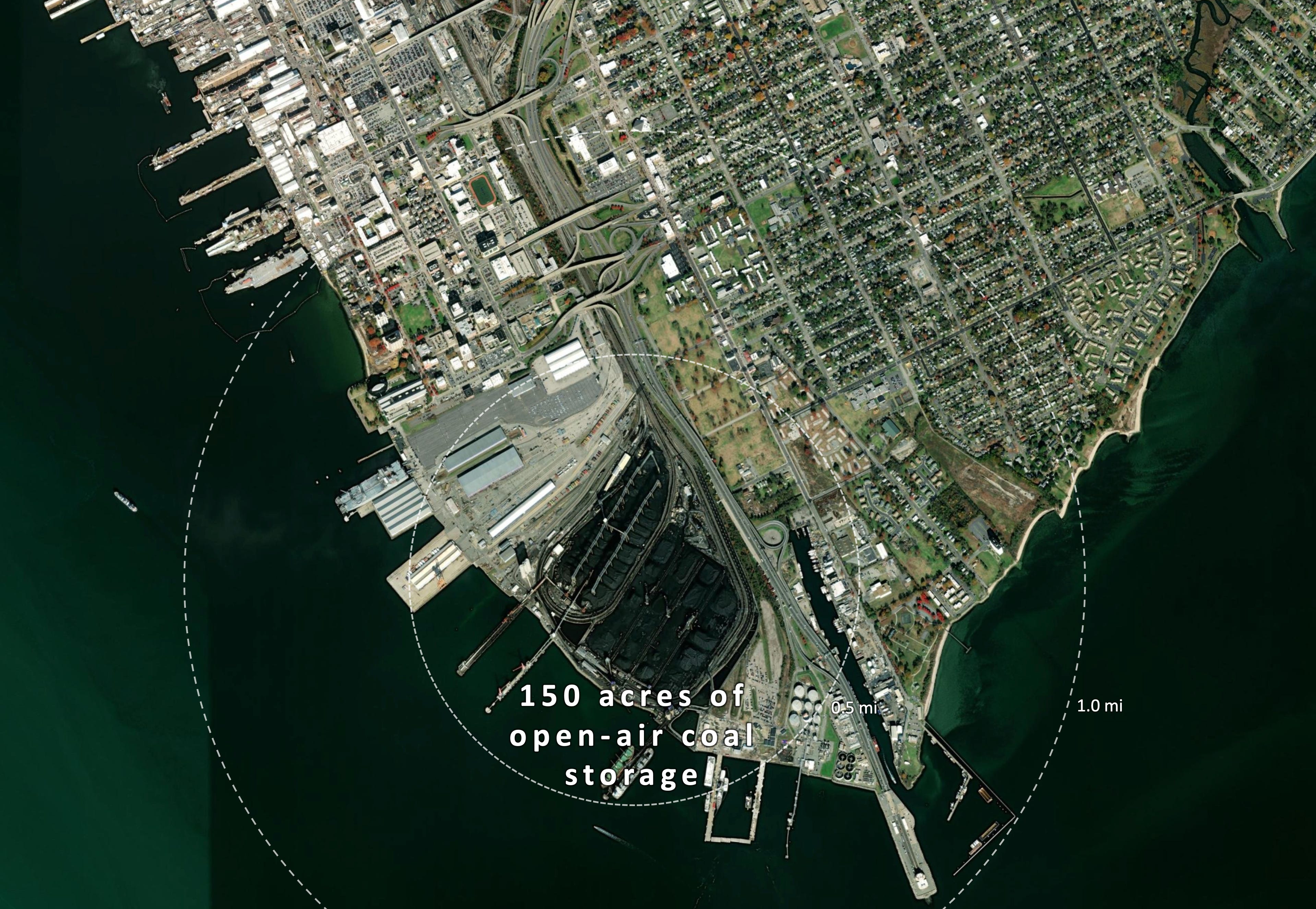


During the Q&A following my presentation, a resident of the East End community stood up to speak. She said something to the effect of “Yeah, we know all this. We experience it every day. We live it.” She went on: “These maps prove what we already know. And they prove that there are a whole bunch of people gaslighting us, telling us that what we live through isn’t actually happening.”
To me, this moment was a striking distillation of the power of data, spatial analysis, and maps to validate the lived experiences of marginalized communities. And it was a stark reminder that these kinds of data, which lay bare the landscapes of inequality that we inhabit, are absolutely necessary in the fight for a more racially and environmentally just future.
Today, just over three weeks into Trump 2.0, much of the data I used to “prove” what that East End resident knew to be true from her lived experience has been purged from Federal data portals. The CDC’s Social Vulnerability Index, which maps counties and neighborhoods by their relative levels of vulnerability - gone. EJScreen, the EPA’s flagship tool for mapping unequal exposure to all kinds of environmental hazards - gone. The Council on Environmental Quality’s Climate and Economic Justice Screening Tool - gone. The Department of Transportation’s Screening Tool for Equity Analysis of Projects - gone. The FDA’s Minority Health and Health Equity Research and Collaboration - gone. ATSDR’s 2024 Environmental Justice Index - gone. (The Washington Post’s Catherine Rampell recently documented dozens of additional missing or disappeared government websites.)
These and other datasets represent decades of work by thousands of dedicated researchers who have meticulously collected, processed, cataloged, stored, and—vitally—made public this information. These datasets are critical for understanding the extent and patterns of social, environmental, and health inequalities in our society today. And these are datasets that I have used extensively over the past several years in my own academic and public-facing work:
In an expert report I authored for a 2020 federal fair housing lawsuit in Norfolk, VA, I used the CDC’s now-unavailable Social Vulnerability Index to show that the overwhelming majority of tenants who were being forcibly removed from public housing in Norfolk, VA, were being relocated into the most socially vulnerable census tracts in the region.
Working with local activists here in SE Virginia, I used now-purged environmental data from the EPA to argue that the industrial rezoning of 65 acres in a majority Black neighborhood in Hampton, VA, would continue to perpetuate disproportionate environmental and health inequalities that those predominantly Black neighborhoods have long suffered.
Across much of the work that I’ve done over the past several years I’ve relied extensively on many of these now-unavailable datasets and mapping tools to show the cumulative economic, environmental, and health inequalities that have resulted from over a century of housing discrimination in American cities.
To be sure, non-profit organizations and ad hoc coalitions of scientists and activists are working steadfastly to preserve these data and continue to make them publicly available. But in a certain sense, that’s beside the point. The Trump administration’s removal of this data won’t resolve the underlying social, environmental, and health inequalities that it helps to expose. Rather, these inequalities will become harder to show. Disparate impacts will be harder to prove in environmental and housing litigation. It’ll be harder to engage our students and educate the public around these topics. And it’ll be easier for the powerful to continue to gaslight marginalized communities.
For the Trump administration and its apologists, I suppose that’s the point. This data purge isn’t an accident. It’s part of a deliberate effort to make inequality harder to show—and easier to ignore.
Environmental Justice and Community Storytelling Tour of the Virginia Peninsula
As a part of the 2025 Hampton Roads Social Justice Conference, we’ll be hosting a pre-conference Environmental Justice and Community Storytelling Tour of the Virginia Peninsula. On the tour we’ll visit three sites of pronounced environmental injustice in Newport News and Hampton. At each site, the group will be joined by local environmental justice advocates who will share the history and details of the EJ issues at that place. The tour will conclude with a debriefing session focused on the roles that Virginia communities can play in fostering environmental change.
Hampton Roads Social Justice Conference Community Art Exhibition
Artists, activists, students, and community members are invited to submit artwork for the Community Art Exhibition as part of the 2025 Hampton Roads Social Justice Conference. This year’s theme, "Elevating Voices, Igniting Change," calls on artists to explore issues of justice, identity, resilience, and activism through creative expression. We seek work that sparks dialogue, challenges injustices, and envisions a more socially just future.
Race in America Forum Series
I’m honored to be featured as a part of the Race in America Forum Series hosted by the First Presbyterian Church of Norfolk. The amazing Dr. Cassandra Newby-Alexander will kick the series off at 5pm on this Sunday, February 16. My lecture will be at 5pm on Sunday, February 23. Both events are free and open to the public. Click here to register in advance, or just show up the day of - I hope to see you there.


Stay in touch!
One thing that I miss about my old email list is receiving your thoughts and feedback. Even though I’ve moved my email list to Substack, you can still just hit reply to this email and it’ll come straight to me. You can also email me directly at john.finn@cnu.edu. I look forward to hearing from you.
My very best,
Johnny